Teleox.ai

Systems

ClipCannon is the video-side DDA/TCT witness.

A 23-stage DAG decomposes source video into multi-modal records, centroids, and provenance with consent-aware release posture.

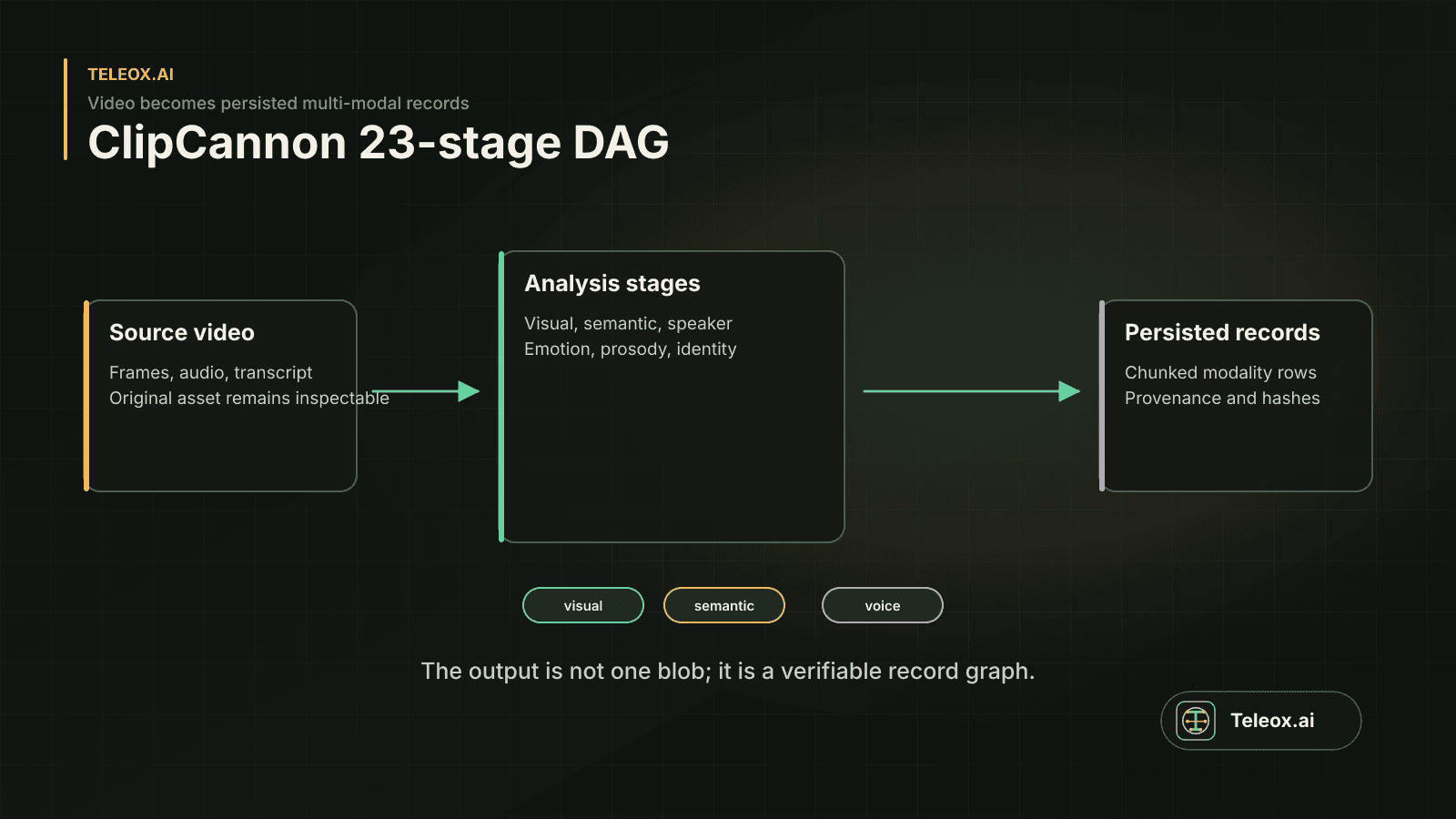
ClipCannon pipeline diagram showing staged analysis from source video to multimodal records.

Figure 1.ClipCannon materializes video into multi-modal records through a 23-stage analysis DAG.

Figure description

The figure shows source video moving through a staged ClipCannon DAG. Analysis stages extract visual, semantic, emotion, speaker, prosody, sentiment, and voice-identity records. The outputs are persisted as multi-modal training and provenance records rather than one unstructured video blob.

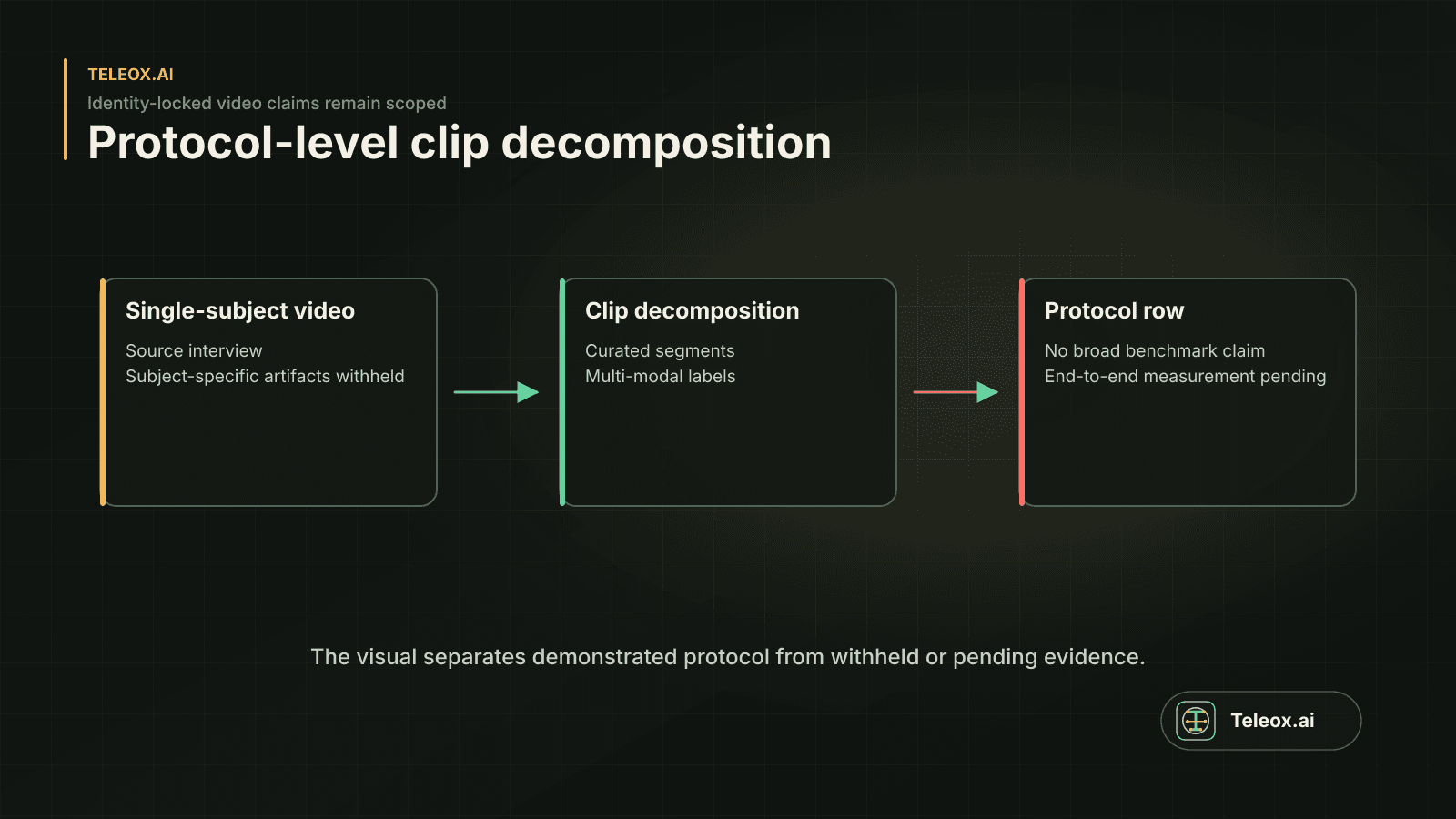
Video decomposition diagram showing a source interview becoming curated multi-modal clips.

Figure 2.The identity-locked video case remains protocol-level; subject-specific artifacts are withheld.

Figure description

The figure represents a protocol-level video case. A single-subject interview is analyzed into curated clips and multi-modal labels. The research site treats the identity-locked talking-head result as protocol-level, with subject-specific artifacts withheld and end-to-end measurement pending.

23-stage video decomposition

ClipCannon transforms source video into structured multi-modal records through a 23-stage DAG. The relevant research point is source-grounded decomposition, not generic video editing.

Seven modalities to a constellation

The video-side panel provides visual, semantic, emotion, speaker, prosody, sentiment, and voice-identity views that can become a TCT-style target constellation.

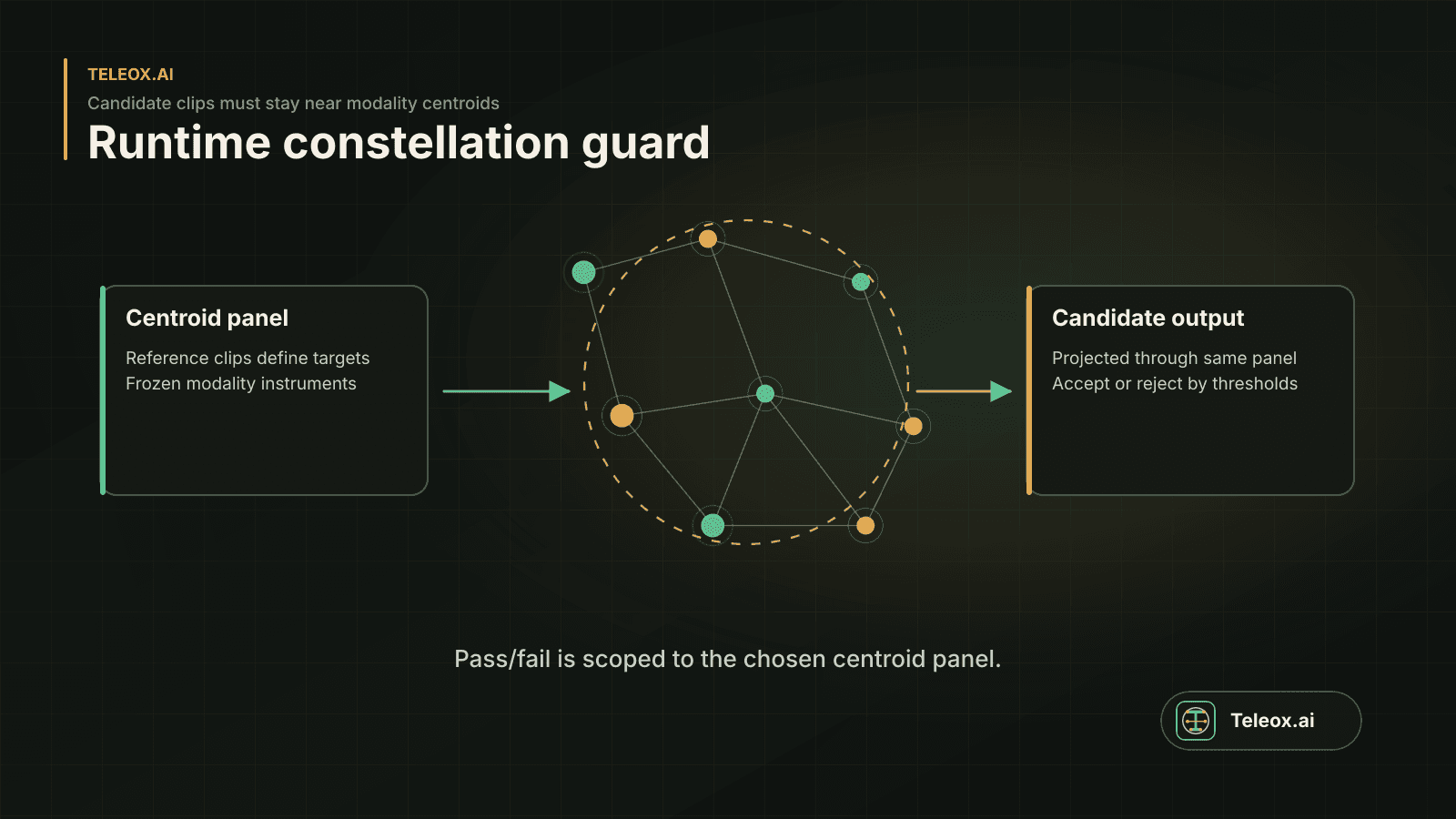
Constellation guard diagram showing generated candidates checked against frozen modality centroids.

Figure 3.ClipCannon supplies the modality centroids used by TCT-style runtime guard checks.

Figure description

The diagram shows modality centroids from ClipCannon as a target constellation. Candidate outputs are projected through the same frozen instruments and accepted only when their modality projections remain within configured thresholds. The check is a panel-relative geometric predicate.

Release posture

Voice and identity demonstrations are dual-use. This site names the method and scoped metrics but does not publish subject-specific clone artifacts.

measured

Voice cloning WavLM SECS case

The published case reports 0.961 mean WavLM SECS on 10 held-out English sentences for one speaker under an encoder-matched protocol.

Mean WavLM SECS
0.961
One English-speaking subject; 10 held-out English sentences; encoder-matched protocol.
Max WavLM SECS
0.975
Reported as a within-protocol maximum, not a cross-encoder identity proof.

protocol-level

Identity-locked video decomposition

The manuscript treats the identity-locked talking-head case as architecturally complete but measurement-pending.

Training clips
2,362 curated clips
Protocol-level current manuscript row; subject-specific artifacts withheld and end-to-end multi-modal measurement pending.

Related videos

00:10:32 / zhgD_iL-4Bc

ClipCannon TCT demo

Video-side DDA and TCT demonstration around multi-modal decomposition and identity centroids.

Open video

00:14:09 / oO9huQ2gSoU

ClipCannon open-source video editor walkthrough

Operational walkthrough for ClipCannon as a local video understanding and editing system.

Open video

Sources

  • docs2/PAPER.md#4.2
  • docs2/PAPER.md#case-2
  • docs2/PAPER.md#case-3