text-dda-witness
Context Graph
Text-side DDA witness using 13 frozen embedders, RocksDB storage, and MCP retrieval tools.
- Embedder panel
- N=13
- Structured signals
- up to 91 per input
Framework
A DDA pipeline holds raw observations constant and materializes structured supervision through frozen embedders and pairwise interaction features.
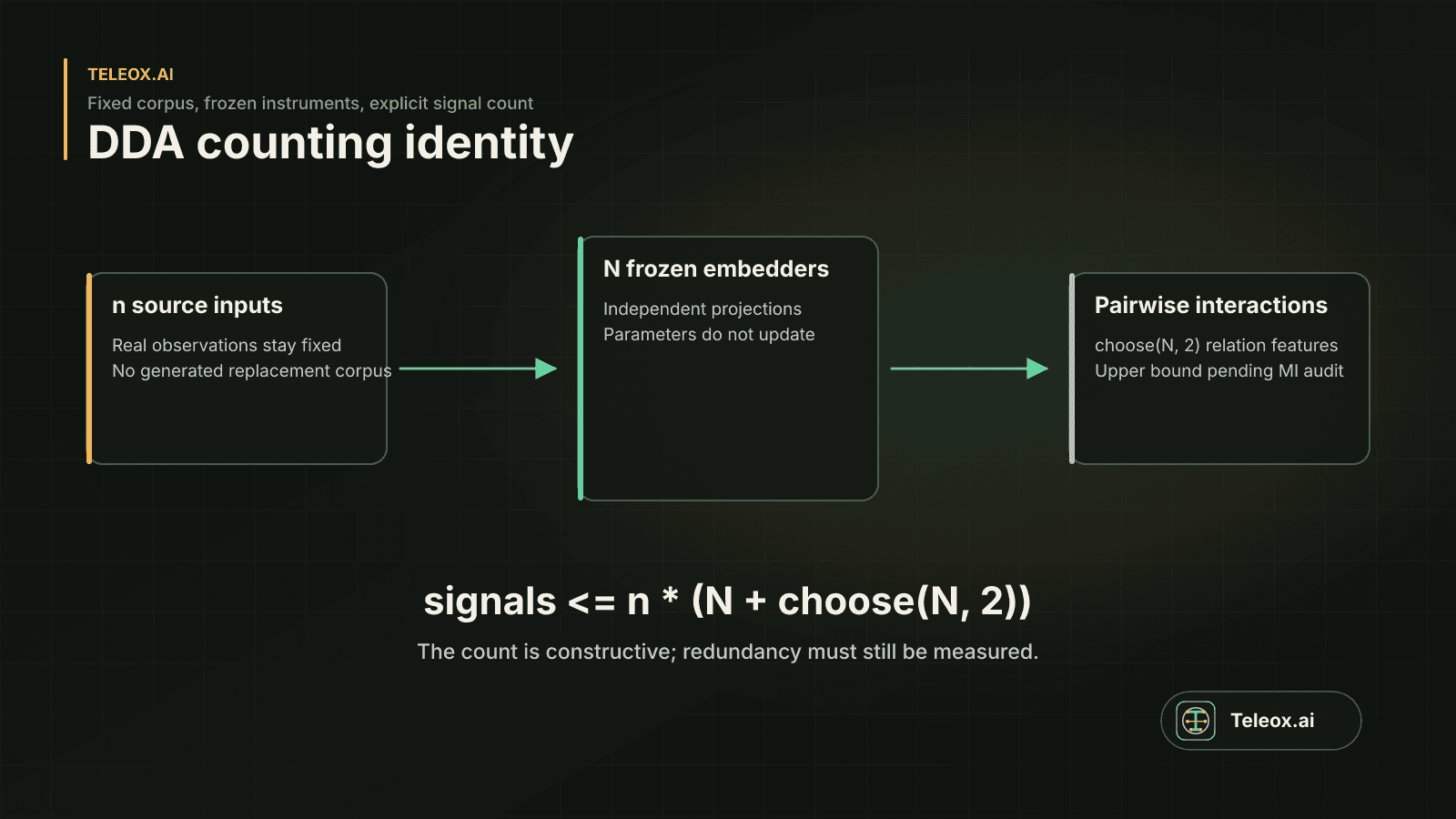
signals <= n * (N + choose(N, 2))Figure 1.The DDA identity counts per-embedder projections plus pairwise interaction features.
The diagram starts with n raw inputs. Each input is passed through N frozen embedders, producing N direct projections. Pairwise interaction features are then computed for every embedder pair, producing choose(N, 2) additional structured signals per input. The displayed identity is signals less than or equal to n * (N + choose(N, 2)); the pairwise term is a constructive upper bound pending mutual-information audit.
A DDA pipeline holds the raw corpus fixed and projects it through frozen embedders. The derived dataset contains per-embedder projections and pairwise interaction features attached to real observations.
Context Graph at N=13 yields up to 91 structured signals per input under the DDA counting identity; the effective pairwise count remains pending a mutual-information audit.
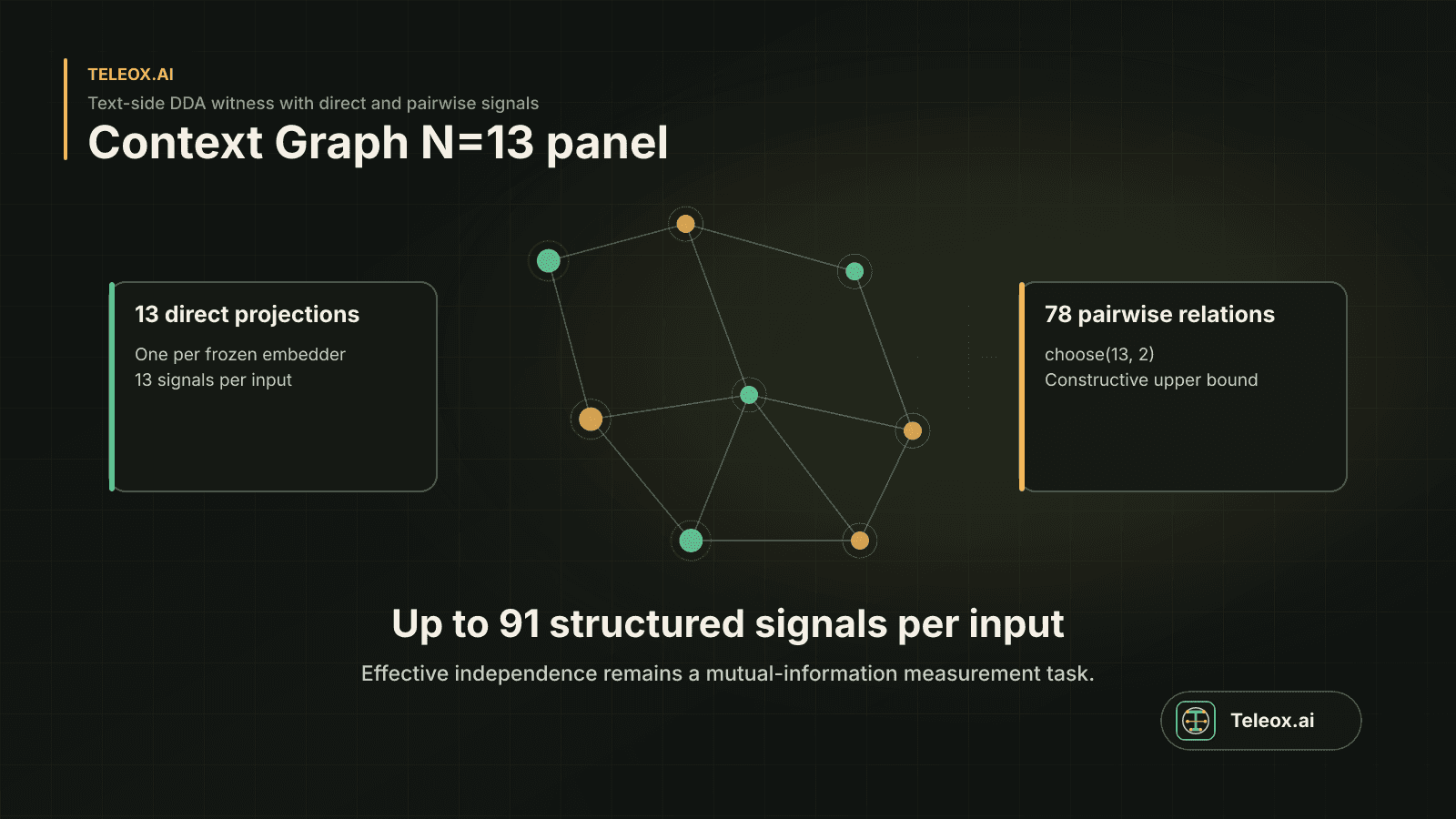
Figure 2.Context Graph is the text-side DDA witness: N=13, up to 91 signals per input as a constructive upper bound.
The figure represents Context Graph as a text-side DDA witness with 13 frozen embedders. The direct projections contribute 13 signals per input and the pairwise interactions contribute up to 78 more, for up to 91 structured signals per input as a constructive upper bound pending mutual-information audit.
text-dda-witness
Text-side DDA witness using 13 frozen embedders, RocksDB storage, and MCP retrieval tools.
ClipCannon at N=7 yields up to 28 structured signals per source clip as a constructive upper bound, and persists those records through a video-side provenance chain.
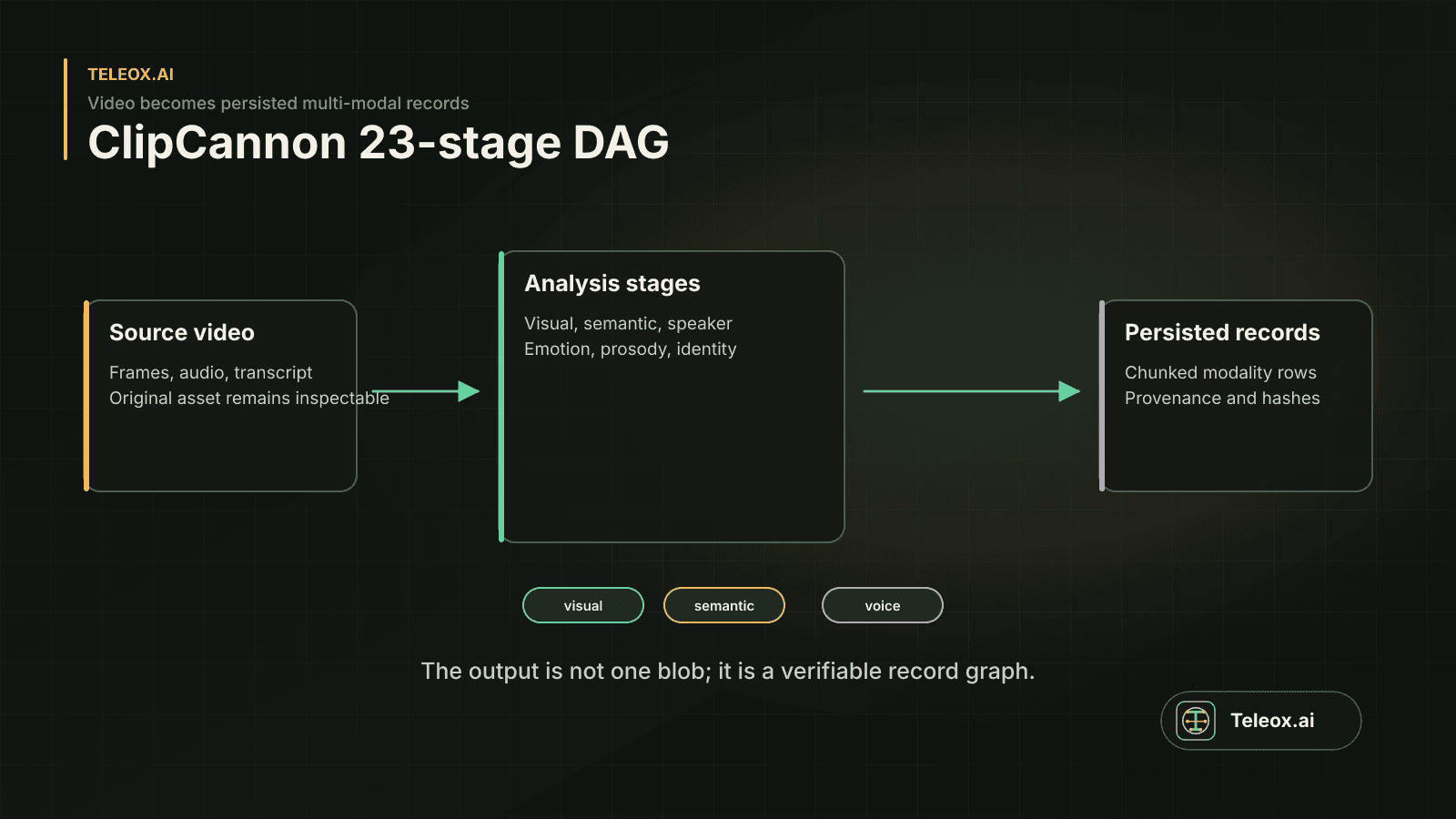
Figure 3.ClipCannon materializes video into multi-modal records through a 23-stage analysis DAG.
The figure shows source video moving through a staged ClipCannon DAG. Analysis stages extract visual, semantic, emotion, speaker, prosody, sentiment, and voice-identity records. The outputs are persisted as multi-modal training and provenance records rather than one unstructured video blob.
video-dda-witness
Video-side DDA/TCT witness using a 23-stage DAG, seven modalities, and per-project provenance records.
The count is structural. The important empirical question is how much independent signal remains after redundancy, overlap, and task-specific relevance are measured.
00:11:23 / 6umU6kuXR3s
Plain-language talk track for the fixed-data DDA move and the meaning-compression ratio.
The formal site claim is narrower than the talk title: DDA is fixed-corpus decomposition and meaning compression is a proposed structured-signal-density measure.
00:11:49 / mXAJgE2G87Q
Concrete public-domain text example for how a small corpus can produce many derived training records.